Long before modern nutritional science existed, cultures across the world had developed detailed and coherent systems for understanding and maintaining male well-being. These frameworks were embedded in broader cosmologies, medical philosophies, and social structures. Examining them offers not only historical interest but also a richer perspective on the complexity of the concepts we continue to engage with today.
The Timeline of Approaches
Ancient Period — Before 500 CE
Ayurvedic Foundations in South and Southeast Asia
Ayurveda, the ancient Indian system of knowledge about life and the body, had profound influence across maritime Southeast Asia — including the archipelago that would become Indonesia — through centuries of trade, cultural exchange, and Hindu-Buddhist civilisational spread. Ayurvedic thinking understood male vitality through the framework of the three doshas (vata, pitta, kapha) and the concept of ojas, described as a refined essence of all bodily tissues that underpins both physical strength and mental clarity. Maintaining and cultivating ojas involved not only food — whole, unprocessed, seasonally appropriate — but also the management of sleep, physical activity, emotional states, and social conduct.
Classical Period — 500–1500 CE
Traditional Chinese Medicine and the Concept of Jing
Traditional Chinese medicine, which reached Indonesia through centuries of maritime trade between China and the archipelago, offers a complementary but distinct framework. The concept of jing — loosely translated as "essence" or "constitutional vitality" — describes an inherited resource that can be conserved, depleted, or partially replenished through lifestyle. Qi, the vital energy that circulates through the body's meridian pathways, represents the more dynamic, day-to-day dimension of well-being. Food, in this framework, is classified not only by its nutritional content but by its energetic qualities: warming versus cooling, nourishing versus dispersing. The practice of maintaining male vitality in Chinese medicine involves balancing these qualities in response to season, constitution, and circumstances.
Medieval and Early Modern — 1500–1800 CE
Jamu Culture in the Javanese Kingdoms
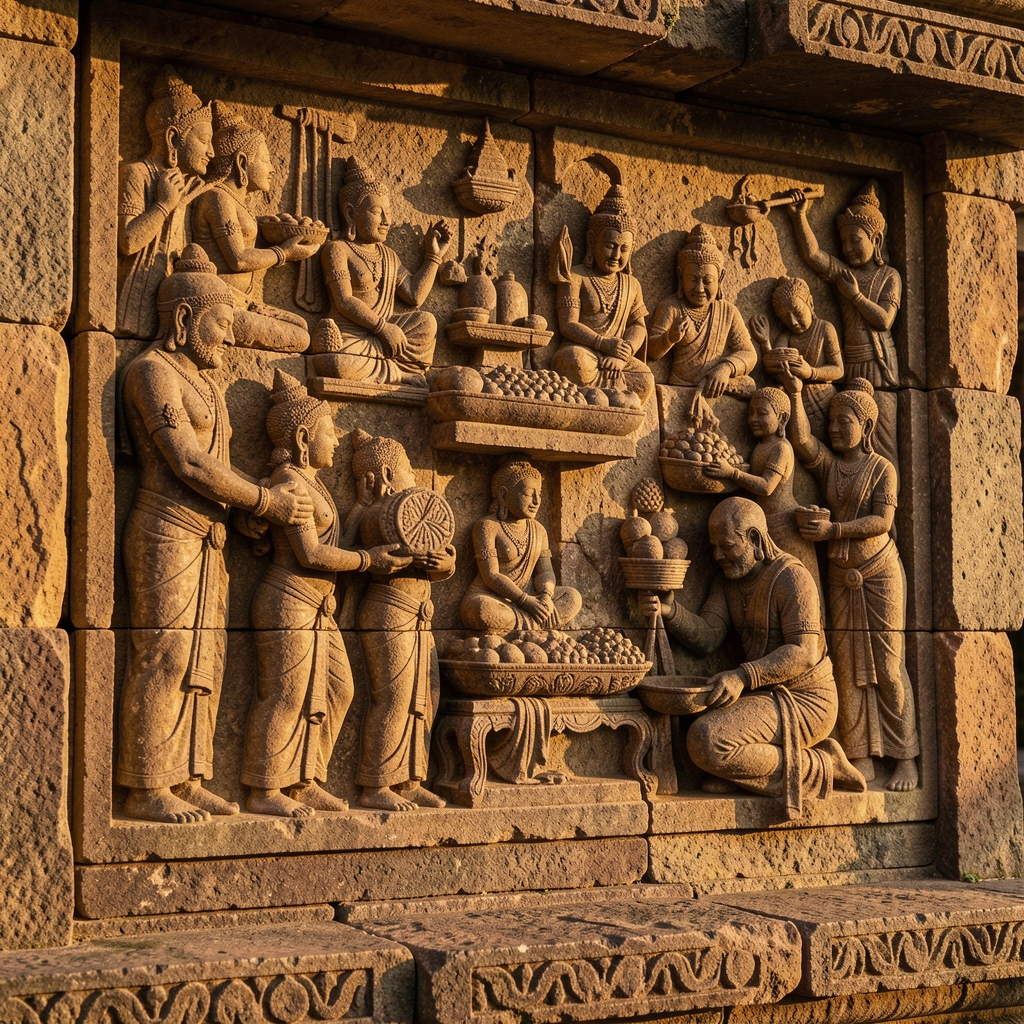
The jamu tradition — the Indonesian system of using locally available plants, spices, and food substances as part of daily well-being practice — was elaborated and codified during the period of the great Javanese kingdoms, particularly in the courts of Mataram and Majapahit. Royal households maintained detailed knowledge of which combinations of ingredients sustained different aspects of male strength, endurance, and composure. This knowledge was preserved in primbon (traditional Javanese manuscripts) and transmitted across generations through court practitioners. The emphasis in jamu culture was not on crisis management but on maintenance: the daily practice of sustaining balance rather than correcting deficiency.
Colonial and Transitional Period — 1800–1945
Contact, Synthesis, and Disruption
The colonial period brought European medical frameworks into sustained contact with existing Indonesian, Ayurvedic, and Chinese traditions. This encounter produced both synthesis and disruption. Colonial botanical surveys documented traditional plant knowledge extensively, while simultaneously dismissing it as superstition in official medical discourse. The result was a complex layering of traditions in which local practices persisted at the community level while biomedical frameworks increasingly dominated formal institutions. Some elements of jamu practice were incorporated into colonial plantation medicine for their practical utility; others were suppressed or stigmatised as incompatible with modern science.
Contemporary Period — 1945–Present
Parallel Frameworks in Modern Indonesia
Today, Indonesia inhabits a particularly interesting position in the landscape of male well-being knowledge. Contemporary nutritional science — with its emphasis on evidence-based research, randomised trials, and biochemical mechanisms — coexists with living traditions of jamu practice, Chinese herbal traditions maintained by Tionghoa Indonesian communities, and Ayurvedic-influenced practices in Bali and other regions. These frameworks are not simply historical artefacts; they are actively used and commercially significant parts of Indonesian daily life. The challenge — and the opportunity — lies in holding them all with appropriate intellectual curiosity rather than dismissing any as irrelevant.
Shared Themes Across Traditions
Despite their different conceptual vocabularies, these traditions share several consistent themes when examined closely. First, they all treat male vitality as a quality that must be actively maintained rather than simply assumed. It is not a static state but a dynamic condition requiring ongoing attention. Second, they all understand food as embedded in a broader context of lifestyle, environment, and practice — not reducible to specific compounds, but part of a whole-person approach. Third, they all emphasise the importance of moderation and balance over any form of extremity. The pursuit of vitality in these frameworks is never framed as an aggressive optimisation project; it is a practice of sustained, attentive equilibrium.
Historical Perspective
The diversity of historical frameworks for male well-being — Ayurvedic, Chinese, Javanese, and others — demonstrates that the question of how men maintain vitality across a lifetime has been central to human culture across many civilisations. Modern science adds new vocabulary and mechanisms to this long conversation; it does not replace it.
Understanding this historical breadth enriches the reading of contemporary nutritional knowledge. It reminds us that what often passes for "modern wisdom" on these topics is frequently a partial and culturally specific view of a much older and wider conversation.